Introduction
In the 1980s, excellent 10-year results were reported from numerous centers that used the so-called "second-generation cement technique." This consisted of using a canal plug, a doughy high-strength cement, a cement gun with introduction of doughy cement in a retrograde manner, and use of a cobalt-chrome stem with rounded corners and a rectangular cross-section.1
Despite the outstanding results of second generation cementing, every aspect of the technique was subsequently modified including the introduction of new cements, new cement techniques such as porosity reduction and pressurization, and changes in stem design including the surface finish and geometry. After these changes occurred, early failures began to be reported with cemented stems of various designs. The failures occurred with a number of components and in a variety of failure mechanisms.2
Early Dramatic Failures
Dramatic early failures were reported with the Capital hip (3M Healthcare Ltd, Loughborough, United Kingdom). Massoud et al3 reported 16% definitely loose and 8% possibly loose at only 26 months. Across the United Kingdom, the 5-year failure rate was estimated at 20%. This stem was "similar to the Charnley hip" but was fabricated of a titanium alloy and had an option for a titanium nitride head and a distal centralizer. Factors associated with loosening of this component were a thin cement mantle, excessive residual bone, and the use of a low viscosity cement. The use of titanium head and a varus positioning of the stem were not statistically associated with loosening.3
Another early catastrophic failure was fracture of the Precoat stem (Zimmer, Warsaw, Ind). Woolson et al4 reported 1.8% stem fractures (10 of 564) at 50 months in patients with an average age of 61 years and weight of 96 kg. The mechanism seemed to be proximal debonding; however, this was associated with laser etching of identifying numbers and letters on the stem. Virtually all reported stem fractures occurred in left hips in which case the laser etching caused a local stress concentration effect on the higher stress anterior surface. This demonstrates how a seemingly minor change can have dramatic consequences.
Variable Results
Much more common than the early dramatic failures are the stems with highly variable results. This has been the rule rather than the exception in recent years. The Precision hip (Howmedica, East Rutherford, NJ) had a reported failure rate of 12% at 68-month follow-up.5 The mechanism of failure appeared to be a power reaming technique, which resulted in polishing of the endosteal surface, decreasing the shear strength at the bone cement interface resulting in early loosening.
The Precoat stem has also been associated with highly variable results. A failure rate of up to 15% has been reported at 5 to 10 years.6 A number of hypothesized mechanisms, including an inadequate broach envelope and abrasion of the rough surface finish, lead to early osteolysis. Other authors, however, reported only 1% to 2% failures at 5-10 years.7
The Iowa hip has had a low incidence of early failures, however, the failures that occurred were associated with aggressive osteolysis. When the same stem was used in young patients, the failure rate was much higher at 18%.8 The mechanism of failure suggested by the authors consisted of superolateral debonding followed by micromotion and debris generation from the rough stem surface. They attributed the early debonding to a circular stem cross-section in the mid and distal portion of the stem that did not effectively resist torsional loading.8
A high failure rate has also been reported with the precoated Centralign stem (Zimmer). Sylvain et al9 reported 11.7% failures at only 33 months. Most recently, Ezzet10 reported an acceptable failure rate of 12.5% at 3-4 years with 72 Versys hips (Zimmer). The factors associated with revision included male sex, high offset components, and the use of the anterior approach. Two centers from Canada reported early failures with the Endurance hip (DePuy, Warsaw, Ind). Kim et al11 reported 189 hips at 2-4 years with 8% failure rate, which they attributed to the stem design, surface finish, broach sizing, and cement mantle. Using the same hip, Bourne et al12 reported a lower failure rate of 3.5%; however, this was at 2-year follow-up. The same group reported a lower failure at 10-year follow-up using the HD2 stem (Howmedica).
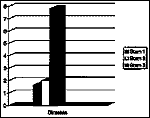
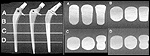
All of the previously mentioned stems with relatively high early failure rate have had a rough surface finish (Ra 50-100 microinches). Numerous rough surface stems, however, had excellent long-term reported results. The Spectron stem (Smith-Nephew, Memphis, Tenn) had a 99.7% 10-year survival in 1018 cases in the Swedish Total Joint Registry.13 Why do some rough surface stems fail dramatically while others are so successful? Mathematical modeling shows a round versus a rectangular stem in the mid and distal cross-section can increase cement stresses up to 300% (Slide 1). Sectioning of stems at different levels shows that most stems are rectangular in the cross-section in the proximal one-fourth immediately under the collar. Some stems that have been associated with early failure and lysis tend to become round in the mid and distal position while others that have had a better track record tend to maintain the rectangular cross-section throughout their length (Slide 2).
Cemented stems are not all created equal. Some generally have a poor track record. Most have variable results and a few have good results. Second-generation technique does not assure long-term fixation. More care should be exercised in introducing new cemented stem designs or cement techniques. Premarket testing such as RadioStereometric Analysis, for instance, is effective in predicting failures. Postmarket surveillance such as registries and multicenter studies recognize failures at an earlier stage before more patients are exposed to a suboptimal design.
Based on the variable results of cemented stems, the use of cementless stems will probably increase. In addition, reassessment of indications for cemented stems is advisable. In young, large, active patients with narrow canals who might require a high offset stem, there is evidence that better outcome might be expected with a cementless stem. Given the unpredictable performance in many recently designed stems, the use of a cemented stem with a well-documented track record from numerous centers beyond 10 years is recommended.
References
- Barrack RL, Mulroy RD Jr, Harris WH. Improved cementing techniques and femoral component loosening in young patients with hip arthroplasty. A 12-year radiographic review. J Bone Joint Surg Br. 1992; 74:385-389.
- Barrack RL. Early failure of modern cemented stems. J Arthroplasty. 2000; 15:1036-1050.
- Massoud SN, Hunter JB, Holdsworth BJ, Wallace WA, Juliusson R. Early femoral loosening in one design of cemented hip replacement. J Bone Joint Surg Br. 1997; 79:603-608.
- Woolson ST, Milbauer JP, Bobyn JD, Yue S, Maloney WJ. Fatigue fracture of a modern forged cobalt-chromium-molybdenum femoral component inserted with cement. A report of ten cases. J Bone Joint Surg Am. 1997; 79:1842-1848.
- Stone KD, Lewallen DG, Ilstrup DM. Femoral loosening following third generation cemented total hip arthroplasty. J Arthroplasty. 1996; 11:228.
- Dowd JE, Cha CW, Trakru S, Kim SY, Yang IH, Rubash HE. Failure of total hip arthroplasty with a precoated femoral prosthesis: 4 to 11 year results. Clin Orthop. 1998; 355:123-136.
- Clohisy JC, Harris WH. Primary hybrid total hip replacement, performed with insertion of the acetabular component without cement and a precoat femoral component with cement. An average ten-year follow-up study. J Bone Joint Surg Am. 1999; 81:247-255.
- Sporer SM, Callaghan JJ, Olejniczak JP, Goetz DD, Johnston RC. Hybrid total hip arthroplasty in patients under the age of fifty: A five to ten year follow-up. J Arthroplasty. 1998; 13:485-491.
- Sylvain GM, Kassab S, Coutts R, Santore R. Early failure of a roughened surface, precoated femoral component in total hip arthroplasty. J Arthroplasty. 2001; 16:141-148.
- Ezzet KA. Unacceptable failure with a currently available PMMA-precoated femoral component in total hip arthroplasty (Zimmer Versys-Plus). J Arthroplasty. 2002; 17:240.
- Kim PR, Felbel RJ, Richard D, Woolfrey MR. Early failure of a contemporary design femoral component. Presented at: the Canadian Orthopaedic Association annual meeting; June 2-5, 2001; London, Ontario.
- Bourne RB, Rorabeck CH, Skutek M, Mikkelsen S, Winemaker M, Robertson D. The Harris Design-2 total hip replacement fixed with so-called second-generation cementing techniques. A ten to fifteen-year study. J Bone Joint Surg Am. 1998; 80-1775-1780.
- Malchau H, Herberts P, Soderman P, Oden A. Prognosis of total hip replacement. Update and validation of results from the Swedish National Hip Arthroplasty Register 1979-1998. Presented as a scientific exhibit at: the 67th Annual Meeting of the American Academy of Orthopaedic Surgeons; March 15-19, 2000; Orlando, Fla.