Early in the development of modern, surface total knee replacement (TKR) the prostheses were intended to function with either retention of the posterior cruciate ligament (PCL) or after removing the PCL. With the introduction of the posterior stabilized prosthesis in 1978, a new concept was introduced.1 The design of this implant was intended to substitute for the PCL. The posterior stabilized prosthesis has subsequently evolved into a line of successful prostheses collectively referred to as posterior stabilized or PCL substituting prostheses. These include the Insall Burstein II and Legacy Posterior Stabilized prostheses (Zimmer, Warsaw, Ind).
These designs share important characteristics. The primary features of these devices are the femoral cam and the polyethylene post on the tibial component (Slide 1). Rather than simply acting as a "fencepost," to prevent posterior subluxation of the tibia relative to the femur, the cam and post also interact in a dynamic manner to enhance the kinematics of these prostheses. Another important feature of these prostheses is the relatively conforming articular geometry of the femoral and tibial components. Lastly, each device was intended to be implanted with the use of cement. Together these characteristics have produced a family of total knee prostheses with unsurpassed clinical survivorship and patient function. Based on the published literature of the past two decades, it is impossible to identify any circumstances where cruciate retaining prostheses have proven superior to posterior stabilized designs, whereas posterior stabilized designs have had higher success than cruciate retaining prostheses.
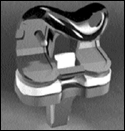
During the 1980s, concerns existed regarding the relatively high articular conformity of posterior stabilized prostheses and whether they would result in stress transmission to the cement/bone interface, which would result in increased loosening rates. However, this has not been identified as a clinical concern.
The clinical survivorship of posterior stabilized prostheses is spectacular by any standards with the success rate free from revision due to aseptic loosening at 10 to 15 years of approximately 95%.2,3 In addition, due to the relative conformity of the articular surfaces, in the sagittal and coronal planes, during the weight-bearing portion of the gait cycle, polyethylene wear at the articular surface has not presented a clinical problem.2
Recently, concerns have been raised about undersurface wear. However, this is not an issue related to whether the prosthesis is a cruciate retaining or posterior stabilized design. Rather, it is a function of modularity and this is the topic for a separate debate. Indeed, motion between the tibial polyethylene insert and base-plate, which is considered to be the cause of undersurface wear, has been shown to occur in a large number of modern total knee designs.4
Another concern with posterior stabilized prostheses has been the flexion instability that results in an acute posterior dislocation of the tibia.5 However, initially the cam and post mechanism was not primarily intended to provide posterior stability. Stability was dependent on the creation of balanced flexion and extension spaces. This requires a good understanding of proper surgical techniques, including soft-tissue releases, to produce rectangular spaces and correct component sizing and positioning relative to landmarks such as the anteroposterior axis or epicondylar axis. In addition, design evolution has helped reduce dislocation rates in posterior stabilized designs.5
Greater concerns have existed regarding flexion instability in cruciate retaining prostheses.6,7 This is due to inadequate intra-operative balancing of the PCL tension or late failure of the PCL. Indeed, late failure of the PCL is a concern as this complication may be unavoidable at surgery. Late failure is likely due to the abnormal histology of the ligament that is part of the degenerative disease process.8
Another area of contention early in the development of posterior stabilized prostheses was the kinematics of posterior stabilized versus cruciate retaining designs. Initially, retention of the native PCL was considered the optimal way of reproducing normal knee kinematics. However, this has not been proven in the clinical setting.
The kinematics of posterior stabilized devices are dictated by the interaction of the cam and post that occurs as the knee flexes (Slide 2). This acts to increase rollback and produce posterior translation of the femorotibial contact point. In distinction, the cruciate retaining devices rely on the histologically abnormal PCL to produce rollback. For this to occur, the PCL must be tensioned correctly intraoperatively and cannot stretch or rupture postoperatively.
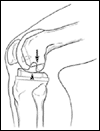
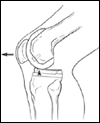
Recent fluoroscopic data has demonstrated that posterior stabilized prostheses more closely reproduce the kinematics of the natural knee.9 In distinction, the kinematics of cruciate retaining devices are more erratic and may in fact be opposite of normal knee function.9 If the PCL is too loose, anterior translation of the femorotibial contact point will occur, whereas if the PCL is too tight, flexion will be restricted (Slide 3). As a result of the superior and more reproducible kinematics, posterior stabilized designs are associated with superior motion under all weight conditions.10
Since the introduction of the posterior stabilized knee more than two decades ago, numerous theoretical concerns have been raised about the long-term function of posterior stabilized devices. However, based on the published results of clinical survivorship and patient function, the evidence increasingly supports posterior stabilized designs over cruciate retaining prostheses. At the start of the 21st century, posterior stabilized designs are clearly the gold standard in TKR.
References
- Pagnano MW, Cushner FD, Scott WN. Role of the posterior cruciate ligament in total knee arthroplasty. J Am Acad Orthop Surg. 1998; 6:176-187.
- Colizza WA, Insall JN, Scuderi GR. The posterior stabilized total knee prosthesis. Assessment of polyethylene damage and osteolysis after a ten-year-minimum follow-up. J Bone Joint Surg Am. 1995; 77:1713-1720.
- Diduch DR, Insall JN, Scott WN, Scuderi GR, Font-Rodriguez D. Total knee replacement in young, active patients. Long-term follow-up and functional outcome. J Bone Joint Surg Am. 1997; 79:575-582.
- Parks NL, Engh GA, Topoleski LD, Emperado J. The Coventry Award. Modular tibial insert micromotion. A concern with contemporary knee implants. Clin Orthop. 1998; 356:10-15.
- Lombardi AV Jr, Mallory TH, Vaughn BK, et al. Dislocation following primary posterior-stabilized total knee arthroplasty. J Arthroplasty. 1993; 8:633-639.
- Pagnano MW, Hanssen AD, Lewallen DG, Stuart MJ. Flexion instability after primary posterior cruciate retaining total knee arthroplasty. Clin Orthop. 1998; 356:39-46.
- Waslewski GL, Marson BM, Benjamin JB. Early, incapacitating instability of posterior cruciate ligament-retaining total knee arthroplasty. J Arthroplasty. 1998; 13:763-767.
- Kleinbart FA, Bryk E, Evangelista J, Scott WN, Vigorita VJ. Histologic comparison of posterior cruciate ligaments from arthritic and age-matched knee specimens. J Arthroplasty. 1996; 11:726-731.
- Dennis DA, Komistek RD, Hoff WA, Gabriel SM. In vivo knee kinematics derived using an inverse perspective technique. Clin Orthop. 1996; 331:107-117.
- Dennis DA, Komistek RD, Stiehl JB, Walker SA, Dennis KN. Range of motion after total knee arthroplasty: the effect of implant design and weight-bearing conditions. J Arthroplasty. 1998; 13:748-752.