Introduction
Conscious sedation is a controlled lessening of a patient's awareness of the environment and pain perception while maintaining stable vital signs, an independent airway, and adequate spontaneous respirations. With conscious sedation, the child will follow verbal instructions.
Deep sedation is a profound depression of consciousness, which may be accompanied by a loss of protective reflexes. Failure to move or respond to noxious stimuli is characteristic of deep sedation, and is the level of sedation required for most painful orthopedic procedures.
General anesthesia is a medically controlled state of unconsciousness with loss of protective reflexes, inability to independently maintain a patent airway, and inability to respond to physical or verbal stimuli. In practice, it is impossible to predict the level of sedation that will occur in an individual patient with even small doses of drugs. Therefore, it is recommended that the orthopedist assume that deep sedation/general anesthesia will occur, and be fully equipped to manage the potential complications.1,2Approaches to Analgesia and Sedation
Evaluation
Any child who is to receive a sedative or analgesic should
have a screening history and physical. The screening history should include
current medications, allergies, time of last meal, and a brief review of
systems including questions regarding heart, lung, liver, and central nervous
system disorders.
Age-specific fasting guidelines should be followed prior to the induction of conscious sedation. In emergent situations, full-stomach sedations can be performed, however, it is recommended that an anesthesiologist supervise these procedures. Children younger than 6 months old should fast for 2 hours from clear liquids and 4 hours from milk and solids. Children 6 months to 3 years of age should fast from clear liquids for 3 hours and milk and solids for 6 hours; and children older than 3 years of age should fast from clear liquids for 3 hours and milk and solids for 6 to 8 hours.3-5
Monitoring
Children undergoing any type of sedation should be monitored
with continuous cardiac monitoring and pulse oximetry, similar to a recovery
room setting. A pediatric "crash" cart and standard reversal medications should
be immediately available.6-10 Patient monitoring should begin prior
to sedation and continue through recovery. Patients must meet post-sedation
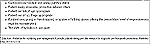
recovery criteria (Table 1) prior to discharge.6,7,11
High-Risk Patients
Certain conditions predispose patients to complications from
sedation. The most serious potential complications include respiratory
depression, loss of airway patency, aspiration, and cardiopulmonary arrest.
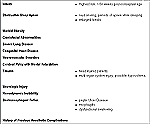
Medical conditions that increase the risk of complications are summarized in
Table 2. A consultation by an anesthesiologist is recommended for high-risk patients.
Pharmacologic Agents
The following is an overview of the more commonly used drugs
for pediatric analgesia and sedation. An in-depth discussion of the
pharmacology of each particular agent is beyond the scope of this tutorial; the
important advantages and pitfalls as they apply to orthopedics are discussed.
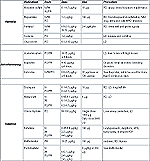
Drug dosages, routes of administration, and precautions are summarized in
Table 3.
Opioid Analgesics
Opioids provide fast, effective relief of pain. When using
opioids for analgesia or sedation, it is recommended that they be given
intravenously. This not only allows for a quicker onset of action, but also
provides a route for administration of support fluids and medications if
complications occur. All opioids can cause itching, nausea, and vomiting.
Additionally, opioids have the potential for respiratory depression,
especially when given in combination with
benzodiazepines.1,4,5,11-13
Morphine
Morphine is the most commonly used opioid analgesic. Its action
is quickest when given intravenously, with peak effect occurring within 20
minutes. Morphine is the most sedating of the opioids. Morphine causes a
histamine release when given at higher doses. This can precipitate bronchospasm
in patients with multiple allergies or asthma.5 Rectal administration is not
recommended as absorption is erratic and may result in delayed respiratory
depression.3,11
Meperidine
Meperidine (Demerol, Sanofi Pharmaceuticals), like
morphine, should be used primarily as an analgesic. The sedative effects are
much less than morphine. Additionally, it produces less of a histamine release
and is a logical choice for patients with multiple allergies or asthma.
Meperidine is absolutely contraindicated in patients taking monoamine
oxidase inhibitors such as amitriptyline or nortriptyline. Taken together,
these drugs can cause convulsions, uncontrolled hypertension, and
death.5 When given
frequently, meperidine has a potential for addiction because of its
associated "high".
Fentanyl
Fentanyl has a rapid onset of action and is approximately 100
times more potent than morphine. It can be given intravenously or sublingually
with the dosage dependent on the route of administration. The peak effect is
achieved 10 minutes after dosing. Fentanyl is considered a good drug for
conscious and deep sedation because of its quick onset of action, short
half-life, and ease of titration. Another option is the fentanyl lollipop. It
should be given 20 minutes prior to painful procedures for maximal effect. When
given rapidly, fentanyl can cause chest wall and glottic rigidity and severe
respiratory depression. The opioid effect lasts from 30 to 45 minutes, however,
the respiratory depression and rigidity can last for several
hours.14,15 The potential for
respiratory depression is markedly increased when given with other
sedatives. Like meperidine, it has potential for addiction and abuse
because of its associated "high".
Codeine
Codeine is generally used for post-procedural pain. Often,
codeine is poorly tolerated by patients because of its associated nausea and
gastrointestinal upset. Codeine requires hepatic metabolism to be converted to
its active form. Therefore, it should not be prescribed to patients with liver
disease.5,11
Oxycodone
Oxycodone is another commonly used oral opioid for
post-procedural pain. It is associated with less stomach upset and nausea than
codeine. Oxycodone comes in the form of both tablet and
elixir.5,11
Non-Narcotic Analgesics
Acetaminophen
Acetaminophen (Tylenol, McNeil Consumer) is the most commonly
prescribed non-opioid analgesic. It is metabolized primarily by the liver and
should be given cautiously to patients with compromised liver function. It is
available as elixir, chewable tablets, capsules, and suppositories. Dosages
should be calculated carefully; acute liver failure can occur with just a
single toxic dose (140 mg/kg) or prolonged overdose.5,11
Nonsteroidal Anti-Inflammatory Drugs
The most commonly used pediatric nonsteroidal
anti-inflammatory drug (NSAID) is ibuprofen. It can be prescribed as a mild
analgesic, antipyretic, or anti-inflammatory. As in adults, ibuprofen can cause
gastrointestinal side effects and compromise renal function if given for
prolonged periods of time. Ibuprofen also interferes with platelet function and
should not be given to patients with bleeding disorders.5,15
Another anti-inflammatory that is becoming more popular for use in children is ketorolac, the only parenteral NSAID. It has been found to be a powerful adjunct for the management of musculoskeletal and post-surgical pain. It has a similar side effect profile as ibuprofen. However, ketorolac should not be used continuously for more than 3 to 5 days because of its potential for renal, gastrointestinal, and bleeding complications.12,14 Some studies have shown an inhibitory effect of NSAIDs on bone healing and ingrowth, making their routine use in orthopedic patients somewhat controversial.
Sedative/Hypnotics
Benzodiazepines
Benzodiazepines are excellent drugs to induce conscious sedation. In combination with opioids, benzodiazepines are popular for the induction of deep sedation, as well. For conscious or deep sedation, they are most effective when given IV. All benzodiazepines are associated with respiratory depression, especially when given with opioids.3,5,11Diazepam
Diazepam (Valium, Roche Pharmaceuticals) is a sedative that can be used alone or in combination with opioids to sedate patients. Intramuscular (IM) administration is discouraged due to its poor absorption and pain at the injection site. Disadvantages to its use include its long half-life (up to 24 hours), irritant effect on veins, and potential for marked respiratory depression when used with an opioid. Diazepam, as all benzodiazepines, is primarily metabolized by the liver and should be used cautiously in children with liver disease.16,17Midazolam
Midazolam (Versed, Roche Pharmaceuticals) has several advantages over diazepam including a much shorter half-life (90 to 120 minutes) and the antegrade and retrograde amnesia it produces. Midazolam is commonly used with fentanyl for conscious and deep sedation. This combination is effective but should be used cautiously because of the increased risk of respiratory complications and arrest.14,16,18Chloral Hydrate
Chloral hydrate is a popular sedative in infants and young children. Peak sedation occurs approximately 1 hour after administration. It generally has minimal effect on respiration, however, deaths have been reported. It is important that the drug be given under supervised conditions and that children are monitored until they meet recommended recovery criteria (Table 1). The danger, especially in infants and young children, is delayed absorption resulting in peak effects occurring before or after the procedure is performed. Without proper monitoring, a child in respiratory arrest can be mistaken for a quietly sleeping child by the parents or caretaker; the result of such a mistake may result in death.10Ketamine
Ketamine is a fast acting derivative of phencylcidine (PCP) that binds to opiate receptors and results in potent analgesia and dissociative amnesia. When using ketamine, we recommend it be given by either an intramuscular or intravenous injection. Used alone it causes tachycardia, hypertension, increased intracranial pressure, and dysphoric reactions. These secondary effects can be decreased or eliminated by premedication with a benzodiazepine; we recommend midazolam. Ketamine also causes increased salivary secretions. Many anesthesiologists recommend premedicating patients with atropine (0.02 mg/kg) or glycopyrolate (0.001 mg/kg) to decrease secretions. Ketamine is a good alternative for deep sedation of healthy children. It should not be used in infants. Ketamine should not be administered to children with a history of cardiac arrhythmias or central nervous system disorders. Additionally, it has been found to depress the gag reflex and should not be given to a child with a full stomach or known gastroesophageal reflux.5,19Barbiturates
Barbiturates are typically used for sedating patients for radiographic and invasive procedures. They produce a profound state of unconsciousness, however, they are not pharmacologically reversible and have no analgesic properties. Barbiturates can be used to sedate pediatric patients undergoing radiographic evaluation. We do not recommend their use for routine sedation of pediatric patients requiring painful interventions.Methohexital Methohexital (Brevital, Jones Medical Industries) is a short-acting barbiturate that has limited use as a sedative. Methohexital has primarily been used as a sedative for radiology procedures. It does not cause respiratory depression, however, close attention must be given to head positioning. Sedation can be so profound that head positioning can result in airway obstruction and death. Methohexital may also produce seizures in children with temporal lobe epilepsy.5,11
Pentobarbital Pentobarbital (Nembutal, Abbott Laboratories, Inc.) is a longer acting barbiturate whose primary use is sedating patients for radiographic procedures. It should be used similarly to methohexital.20,21
Demerol, Phenergan, Thorazine (DPT)
DPT is a lytic cocktail composed of Demerol (meperidine, Sanofi
Pharmaceuticals), Phenergan (phenelzine sulfate, Wyeth-Ayerst Laboratories),
and Thorazine (thonzonium bromide, SmithKline Beecham Pharmaceuticals). DPT is
effective in producing profound sedation and analgesia, and has historically
been used for conscious and deep sedation. The sedation produced by this
cocktail can last from 4 to 6 hours putting the child at risk for late
complications, especially if not monitored carefully. Several deaths have been
reported after use of DPT. Patients are at risk for extrapyramidal movements,
seizures, and profound respiratory depression.20 Because of the
prolonged duration of deep sedation and risk of severe and life-threatening
complications, this cocktail is no longer recommended.
Topical Anesthetics
Tetracaine, Adrenaline, Cocaine (TAC)
Topically applied tetracaine, adrenaline, and cocaine (TAC)
have become popular for the suturing of lacerations and exploration of wounds.
It is important to use a diluted solution of TAC in small children to
minimize the risk of systemic toxicity and overdose. The current pediatric
dosage recommendations are 1% tetracaine, 1:4000 adrenaline, and 4% cocaine.
With this mixture, the maximal dosage is 1.5 mL/10 kg. A variety of premixed
TAC solutions are available; therefore, verification of the dose being given is
necessary. Signs of systemic toxicity include tachycardia, hypertension, and
seizures. TAC is a potent vasoconstrictor and should not be used in areas of
limited circulation such as the hand.3
Lidocaine, Epinephrine, Tetracaine (LET)
LET is another topical anesthetic combination that is similar
to TAC. LET stock solution should contain 0.4% lidocaine, 0.1% epinephrine, and
0.05% tetracaine. Using this mixture, a maximum of 2 mL should be applied to
the area to be anesthetized. Like TAC, LET is a potent vasoconstrictor and
should not be used in areas of limited circulation.5
Eutectic mixture of local anesthetics
Eutectic (EMLA) cream is a mixture of lidocaine and prilocaine
that is applied to the skin for 30 to 60 minutes to produce topical anesthesia.
It can be helpful prior to placement of an intravenous (IV) line for further
sedation or for suturing small lacerations. If large areas of skin are coated
or if placed on mucosal surfaces, children can develop signs of systemic
toxicity similar to those seen with TAC.22,23
Local Anesthetics
Local anesthetics are often used in the management of pediatric orthopedic patients for hematoma blocks, digital blocks, and regional blocks prior to reduction or cast application. The more common drugs used include lidocaine, bupivacaine, tetracaine, and procaine. These agents can generally be used safely as long as maximum dosage guidelines are followed (Table 3). Exceeding dosage guidelines can result in systemic toxicity. Signs of systemic toxicity include seizures and cardiovascular depression.3-5
Emergency Reversal Agents
The two main reversal agents are flumazenil, a benzodiazepine antagonist, and naloxone, an opiate antagonist. Flumazenil can be given intravenously and intramuscularly. In emergency situations, the intravenous route is preferred. The recommended dose of flumazenil is 0.01 mg/kg, repeated every minute until reversed to a maximal dose of 1 mg. Flumazenil has a half-life of 60 minutes and may require redosing in patients receiving benzodiazepines with a long half-life (e.g. diazepam). Naloxone can be administered by an intravenous injection, intramuscular injection, or endotracheally. The recommended dose of naloxone for children younger than 5 years of age or less than 20 kg is 0.1 mg/kg repeated every 2 to 3 minutes until reversal of narcosis; for children older than 5 years of age or more than 20 kg, 2 mg per dose. It is important to remember that the half-life of naloxone (6 minutes) is much shorter than most opioids (60 minutes) and may require repeated dosing to prevent a relapse of narcosis.6,24 It is not recommended that these medications are used for routine reversal of sedation, as they have been associated with seizures and can precipitate rebound pain that is difficult to treat.Recommendations
Sedation for Radiographic Procedures
Children often require radiographic evaluation for orthopedic conditions. Many of these radiographic procedures, such as magnetic resonance imaging (MRI) and computerized tomography (CT), require a calm and cooperative patient. General anesthesia may be necessary for very young children or for uncooperative older children. Toddlers and younger children generally require some type of sedation. We recommend oral or IV midazolam. Another alternative is pentobarbital given by either an intravenous or intramuscular injection. Close monitoring of head positioning is important when using pentobarbital because the profound unconsciousness it produces can result in airway obstruction. Most children are cooperative enough by age 7 or 8 to tolerate an MRI or CT scan with minimal or no sedation.1,20
Sedation and Analgesia in Fracture Reduction
Depending on the severity of the fracture and the anxiety level of the patient, many options are available. Older children and stoic younger children often do well with a simple hematoma or nerve block. Regional blocks are another option in older children.3,4
Younger and less stoic children will often require conscious or deep sedation for acute fracture reduction. Ketamine is safe and effective for sedating healthy children. It can be given by either an intravenous or intramuscular injection. Children should be premedicated with midazolam to prevent dysphoric reactions, and atropine or glycopyrolate to decrease secretions. Ketamine should be avoided in patients with central nervous system disorders or cardiac dysrhythmias.25
A combination of an IV, short-acting benzodiazepine, and an opioid, such as midazolam or fentanyl, is another popular method of sedating children for fracture reduction. We recommend these drugs because they are close to an ideal combination. Both of these drugs are potent, fast acting, have a short half-life, and can be reversed. They are generally effective, however, the risk of respiratory depression and arrest is always present.13,15 Children should be monitored closely throughout all phases of sedation and the appropriate reversal agents should be readily available.
References
- Maxwell LG, Yaster M. The myth of conscious sedation. Arch Pediatr Adolesc Med. 1996; 150:665-667.
- Proudfoot J. Analgesia, anesthesia and conscious sedation. Em Med Clin North Am. 1995; 13:357-379.
- Cote CJ. Sedation for the pediatric patient. Ped Clin North Am. 1994; 41:31-58.
- Tobias JD, Rasmussen GE. Pain management and sedation in the pediatric intensive care unit. Ped Clin North Am. 1994; 41:1269-1292.
- Yaster M, Krane EJ, Kaplan RF, Cote CJ, Lappe DG (eds). Pediatric Pain Management and Sedation Handbook. St. Louis, MO: Mosby; 1997.
- Committee on Drugs, American Academy of Pediatrics. Guidelines for monitoring and management of pediatric patients during and after sedation for diagnostic and therapeutic procedures. Pediatrics. 1992; 89:1110-1113.
- Committee on Drugs, Section on Anesthesiology, American Academy of Pediatrics. Guidelines for the elective use of conscious sedation, deep sedation, and general anesthesia in pediatric patients. Pediatrics. 1985; 76:317-321.
- American College of Emergency Physicians. ACEP policy statement: Essential pediatric equipment guidelines for the general emergency department. ACEP Policy Statement. Dallas, 1991.
- American College of Emergency Physicians. ACEP policy statement: the use of pediatric sedation and analgesia. ACEP Policy Statement. Dallas, 1997.
- Guidelines for monitoring and management of pediatric patients during and after sedation for diagnostic and therapeutic procedures. Pediatrics. 1992; 89:1110-1115.
- Proudfoot J. Analgesia, anesthesia and conscious sedation. Em Med Clin North Am. 1995; 13:357-379.
- Smith SM, Barry RC. A comparison of three formulations of TAC for anesthesia of minor lacerations in children. Ped Emer Care. 1990; 6:266-270.
- Varela CD, Lorfing KC, Schmidt TL. Intravenous sedation for the closed reduction of fractures in children. J Bone Joint Surg. 1995; 77A:340-345.
- Graff KJ, Kennedy RM, Jaffe DM. Conscious sedation for pediatric orthopedic emergencies. Ped Emer Care. 1996; 12:31-35.
- Dach RJ, Innes GM. Intravenous ketamine sedation of pediatric patients in the emergency department. Ann Emer Med. 1997; 29:146-150.
- Klotz U, Avant GR, Hoyumpa A. The effects of age and liver disease on the disposition and elimination of diazepam in adult man. J Clin Invest. 1975; 55:347-359.
- Morselli PL, Principi N, Tognoni G. Diazepam elimination in premature and full term infants and children. J Perinat Med. 1973; 1:133-141.
- Conors K, Terndrup TE. Nasal versus oral midazolam for sedation of anxious children undergoing laceration repair. Ann Emer Med. 1994; 24:1074-1079.
- Yaster M, Nichols DG, Deshpande JK. Midazolam-fentanyl intravenous sedation in children: Case report of respiratory arrest. Pediatrics. 1990; 86:463-467.
- Cook BA, Bass JW, Nomizu S. Sedation of children for technical procedures: Current standard of practice. Clin Ped. 1992; 31:137-142.
- O’Brien JF, Falk JL, Carey BE. Rectal thiopental compared with intramuscular meperidine, promethazine, and chlorpromazine for pediatric sedation. Ann Emer Med. 1991; 20:644-647.
- Halperin DL, Koren G, Attias D. Topical skin anesthesia for venous, subcutaneous drug reservoir and lumbar punctures in children. Pediatrics. 1989; 84:281-284.
- Robieux I, Eliopoulos C, Hwang P. Pain perception and effectiveness of the eutectic mixture of local anesthetics in children undergoing venipuncture. Pediatr Res. 1992; 32:520-523.
- Shannon M, Albers G, Burkhart K, et al. Safety and efficacy of flumazenil in the reversal of benzodiazepine-induced conscious sedation. J Ped. 1997; 131:582-586.
- Petrack EM, Marx CM, Wright MS. Intramuscular ketamine is superior to meperidine, promethazine and chlorpromazine for pediatric emergency department sedation. Arch Ped Adol Med. 1996; 150:676-681.